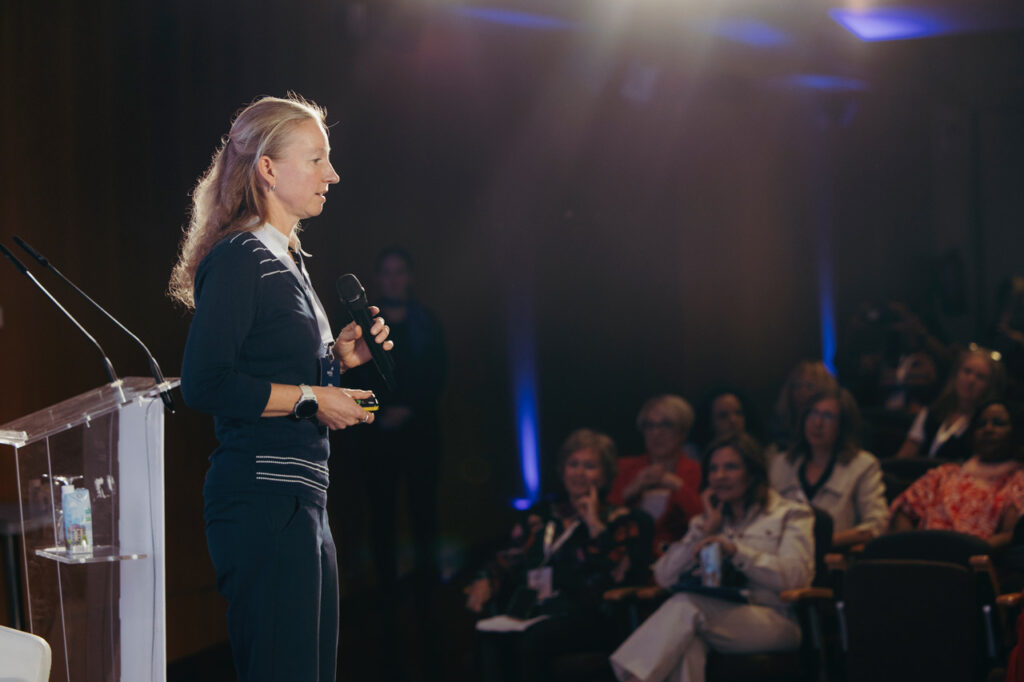
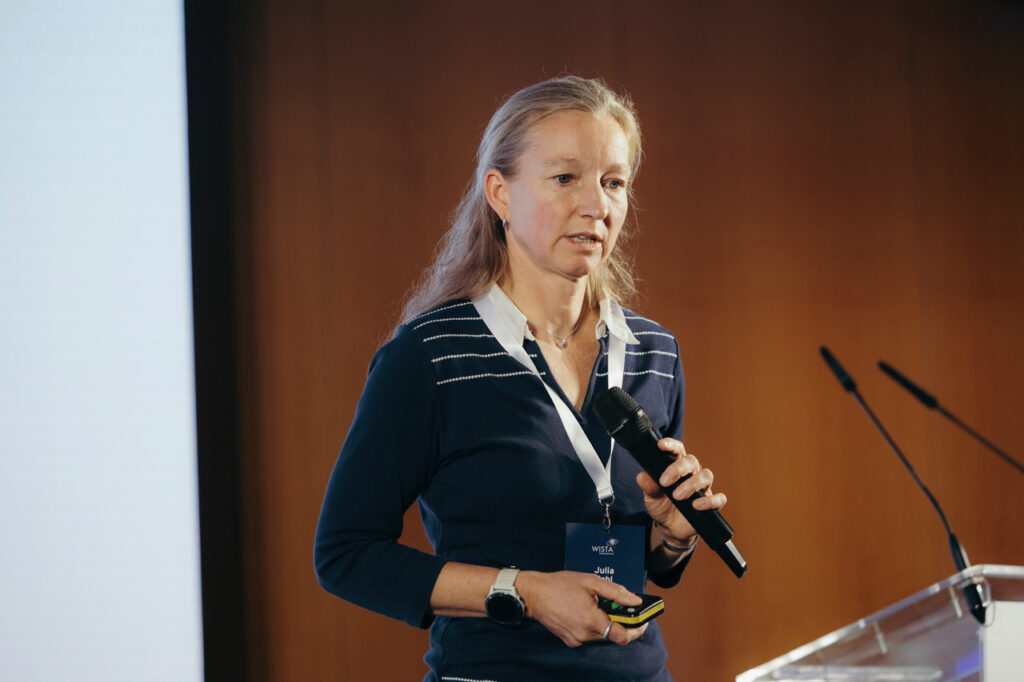
The 2025 WISTA AGM and Conference, held in Barcelona from 22–24 October, brought together over 400 maritime professionals and leaders from around the world to discuss critical issues in shipping, trade, and logistics, including gender equality, decarbonisation, and innovation.
Julia Pahl, coordinator of the MISSION project, attended the event, representing the project and engaging with industry stakeholders on topics closely aligned with MISSION’s goals:driving systemic change, supporting inclusive leadership, and fostering sustainable decision-making across the maritime value chain.
Collaboration as the Engine for Progress
In her keynote address, WISTA International President Elpi Petraki underscored the importance of collective action. She highlighted that the maritime sector’s greatest strength lies in its ability to bridge cultures and disciplines, creating the conditions for innovation. Referencing this year’s Nobel Prize laureates in Economic Sciences, she emphasised that meaningful progress often emerges from challenging established norms.
Speakers from the Port of Barcelona, the Spanish Ministry of Maritime and Air Transport, and the Government of Catalonia echoed this message. They stressed the need for unity in tackling decarbonisation, digitalisation, and gender equality—calling on the sector to “challenge the status quo” and accelerate the transition towards a more inclusive and sustainable maritime future.
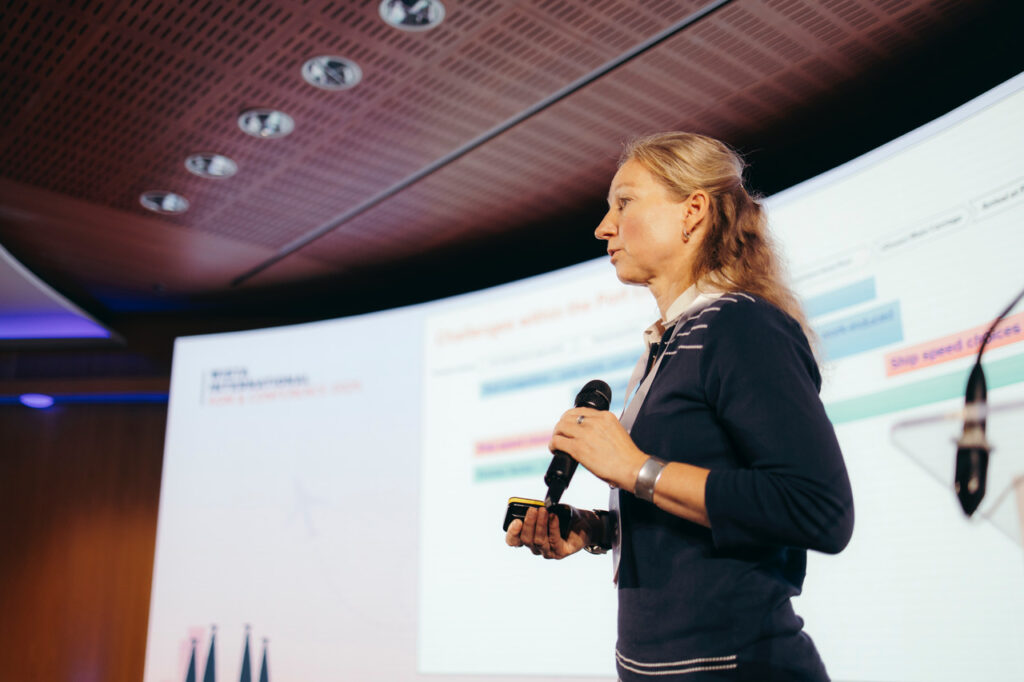
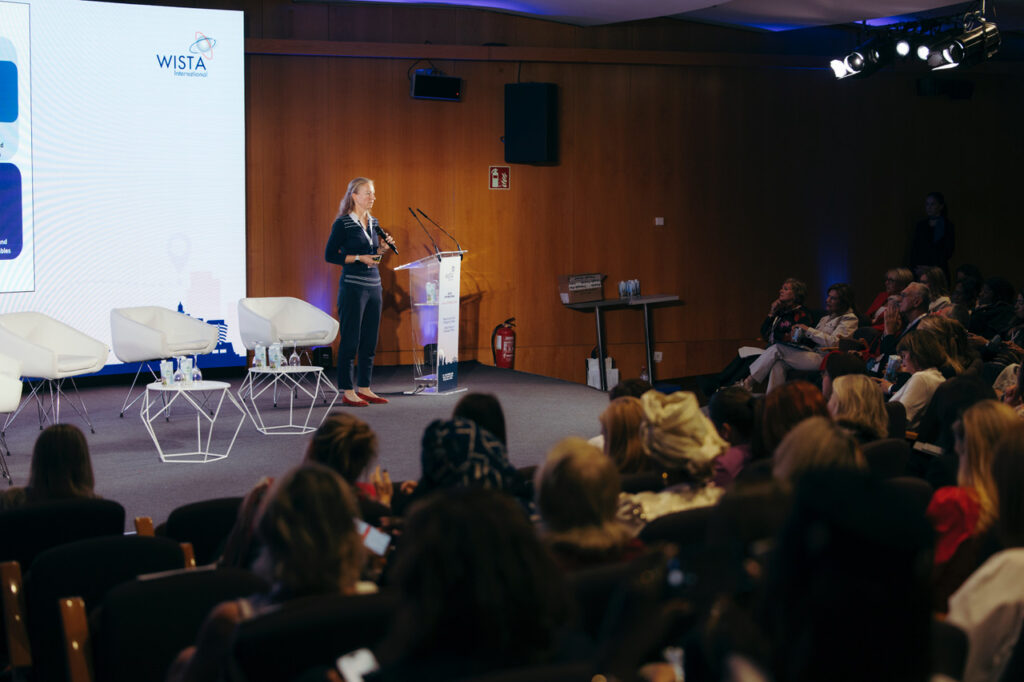
A Global Agenda for a Transforming Industry
The programme featured high-level discussions on the complexities facing international trade and shipping. A key highlight was the decarbonisation panel, where IMO Secretary-General Arsenio Dominguez provided an update on the outcomes of the latest MEPC extraordinary session. Additional sessions examined the role of shore power, just-in-time port calls, and the impact of geopolitical tensions on supply chains.
A fireside chat between Dominguez and Dorothea Ioannau, CEO of The American P&I Club, offered insights into policy and regulatory developments, the treatment of seafarers, crew welfare, the BBNJ Treaty, and the role of women in maritime leadership.
MISSION’s participation underscores the project’s commitment to building bridges between research, policy, and industry, supporting collaboration that drives innovation, equality, and sustainability in the maritime sector.